
A conversation on faith, farming, and food justice at Koinonia Farm
Some conversations start with food and end up touching everything.
That’s what happened when I sat down to talk with a longtime member of Koinonia Farm, the intentional Christian farming community outside Americus, Georgia. What began as a conversation about sustainable agriculture quickly expanded into a deeper discussion about poverty, hospitality, civil rights, soil biology, and the responsibility we all share in shaping the food system.

Amanda Moore, member of Kiononia Farm
Below is our conversation, edited lightly for clarity. The full conversation will be part of our new podcast season coming soon!
Beginning the Conversation
LeeAnna:
I like to start with people’s food journeys — why food matters to them. So I’m curious about your story — how you got into food and farming, and how that led you here to Koinonia.
Growing Up in Appalachia
Amanda:
I’m from Appalachia, Tennessee, where pretty much everybody had a garden in their backyard.
Zucchini and green beans were the language of love all summer long. Squash carried us through the winter. Food was central to hospitality, family, and church potlucks every week.
My dad kept a big garden. He raised rabbits, and my uncle lived behind us and had chickens. He actually had chicken tractors before I even knew what a chicken tractor was.
Sometimes he’d let the chickens run loose for a bit so they could eat bugs in the yard, then put them back so we could collect the eggs.
So I grew up understanding farm-to-table food in a very personal way.
“Zucchini and green beans were the language of love all summer long.”
Then my dad died.
My mom struggled to raise the three of us, and we ended up in a really difficult place — poverty, homelessness, and a lot of health issues.
We relied on food pantries to survive.
I remember one pantry in the basement of a Catholic church that was set up like a grocery store. You could walk the aisles and choose what you wanted within a certain budget.
And I remember thinking: these foods look good, but there are no fresh vegetables here. No fresh meat. No milk.
Just canned vegetables, canned meat, boxed pasta, powdered milk.
I’m incredibly grateful for the churches that helped sustain us.
But my whole family now deals with health issues that stem from those years of poor nutrition.
“The shelves were full, but there were no fresh vegetables. No milk. No real meat.”
When Food Becomes a Justice Issue
Amanda:
As I got older, I began to see how poverty and food access go hand in hand.
If you have land — even just a backyard — you can grow food. And often it’s cheaper than buying it at the grocery store.
But if you don’t have access to land, you’re dependent on the food system that exists around you.
I remember the first time I saw a kiwi.
I think I was in sixth grade. Someone brought sliced kiwi to school and I thought their family must be so rich.
It seemed so exotic and delicate.
Now kiwis are everywhere, but I had never seen one as a child.
“Food access is a social justice issue.”
College and the Food System
Amanda:
I was fortunate to receive scholarships to attend a private Christian liberal arts college. While I was there, I worked several jobs to help pay for school, including working in the campus cafeteria. At the same time, I volunteered regularly at a soup kitchen.
So I was seeing two different food systems side by side.
In the cafeteria, we were producing high-quality meals for large groups on a budget. Then I would go to the soup kitchen and see mostly canned foods — canned beets, processed foods, almost no fresh vegetables. I don’t remember seeing a single fresh vegetable there.
“I was seeing two completely different food systems side by side.”
Discovering Koinonia
Around that same time, she encountered the story of Koinonia Farm through a documentary. The film tells the story of the interracial Christian farming community founded in 1942 that would later help inspire Habitat for Humanity.
Amanda:
A group from my church mentioned they were traveling to this Christian community farm in Georgia that focused on social justice and community living. t sounded exactly like what I was interested in at the time. So during spring break, I came down to visit.
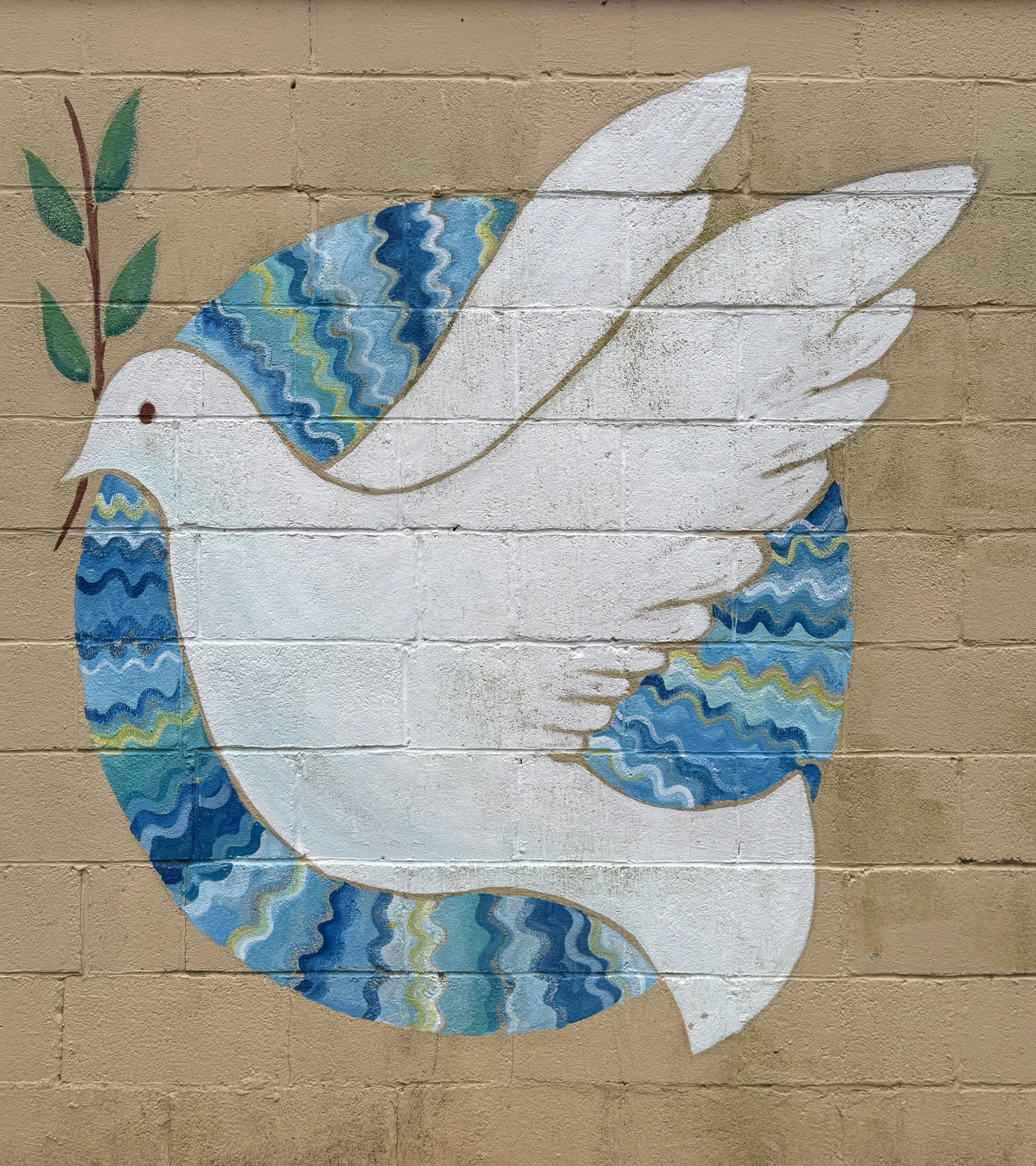
Koinonia Farm
I was already learning about Koinonia in class, and then suddenly I was here, seeing it firsthand. I came back later for a three-month internship.
But I realized quickly that three months wasn’t enough time to really understand the place. Within a year, I became a member. That was nearly nineteen years ago.
The History of Koinonia
Koinonia Farm was founded in 1942 by Clarence Jordan, a farmer and theologian who believed the teachings of Jesus should be lived out in daily life. That belief created a radically different community in the Jim Crow South. Black and white members lived together, worked together, and shared meals together — something that was considered dangerous and illegal in many places at the time.
“Koinonia was founded as a demonstration plot for the Kingdom of God.”
Pecans and Survival
During the 1950s, a boycott led by the Ku Klux Klan made it nearly impossible for Koinonia to sell products locally.
Amanda:
Local businesses refused to buy from us or sell to us. We couldn’t get seeds or supplies for our crops.
We had introduced the chicken industry to this region and had one of the largest flocks around — but during the boycott we had to slaughter nearly the entire flock. Eventually we turned to pecans as our main crop.
Pecans could be sold on the open market and shipped across the country. That’s when we started our mail-order business.
“Help us ship the nuts out of Georgia.”
Learning Soil Biology
Amanda:
One consultant who worked with us taught me something I’ll never forget. She said: You have to set the table for what you want.
In soil biology, that means creating conditions where the plants and organisms you want can thrive. Instead of just spraying chemicals, you focus on building a healthy ecosystem. You plant clover to fix nitrogen.
You rotate animals through the land. You encourage beneficial insects. You feed the soil so the soil can feed everything else.
“You have to set the table for what you want.”
Faith and the Land
Amanda:
Where I grew up, people often quoted the scripture about the earth being our footstool — that the earth is here for us to use.
But “use” can mean different things. It can mean stewardship. Or it can mean extraction. If you’re only taking and never giving back, you’re depleting the land. Farmers understand this intuitively.
“If you don’t feed your soil, you won’t get a good crop.”
The Power of Food Choices
Amanda:
Every dollar you spend on food is a vote. You’re supporting a system. You might be supporting local farmers.
Or you might be supporting exploitation somewhere else in the world. Most people don’t realize that. But once you learn about it, you can’t unknow it.
“Every dollar you spend on food is a vote.”
Soil Work Is Soul Work
After nearly two decades at Koinonia, the connection between farming and faith feels clearer than ever.
Amanda:
Soil work and soul work are the same work. When you build healthy soil, you’re building a future. When you build healthy communities, you’re doing the same thing.
“Soil work and soul work are the same work.”
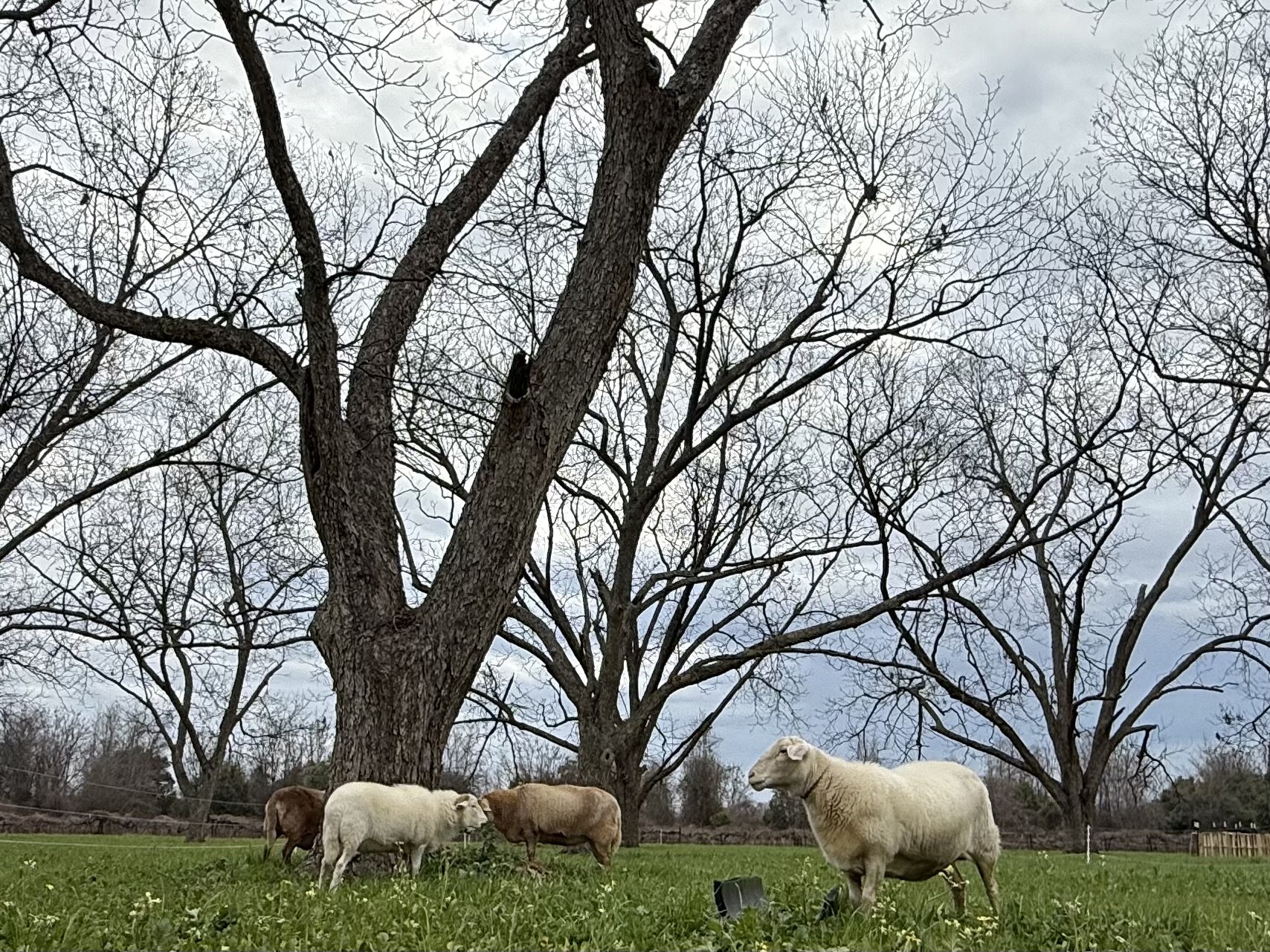
Sheep grazing in the pecan orchards at Koinonia Farm